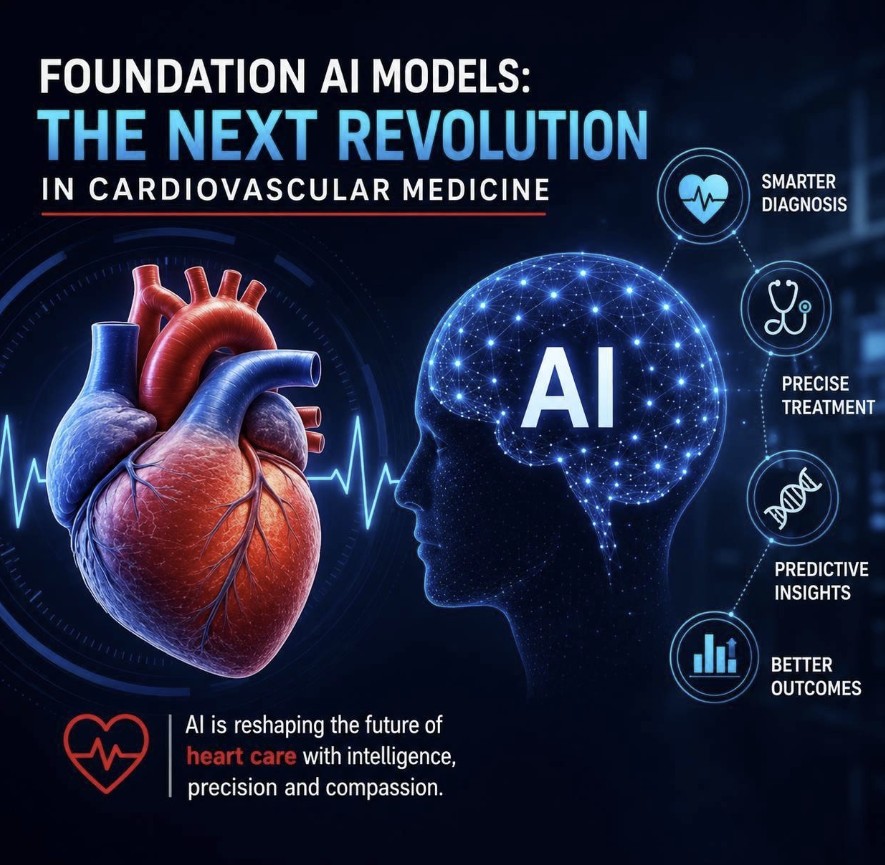
Artificial Intelligence (AI) is rapidly transforming cardiovascular drug development and medical device innovation—from patient selection and endpoint adjudication to medical imaging and real-world data analysis.
But the real question is no longer:
“Can we use AI?”
It is:
“Can we demonstrate that AI is reliable, clinically meaningful and fit for its intended regulatory purpose?”
Key regulatory considerations for AI-enabled development
🔹 Fit-for-purpose validation
Validation should reflect the intended use, patient risk and regulatory impact—not simply algorithmic performance.
🔹 Data quality matters
AI performance is fundamentally dependent on the quality, relevance and representativeness of the underlying data.
🔹 Human oversight remains critical
For high-impact decisions, a human-in-the-loop approach can combine AI efficiency with clinical expertise.
🔹 Transparency & explainability
AI outputs should be clinically interpretable and aligned with established scientific and clinical criteria.
🔹 Lifecycle management
Model performance, data drift, updates and changes require ongoing monitoring and controlled change management.
🔹 Regulatory documentation
Development, validation, data processing, performance monitoring and decision-making processes should be appropriately documented and audit-ready.
The opportunity
When implemented responsibly, AI can accelerate innovation, improve efficiency and generate richer clinical evidence—without compromising safety, quality or scientific integrity.
At Comvatech, we believe regulatory strategy should evolve alongside technology—not after it.
AI may drive the innovation.
Regulatory science builds the confidence to bring it to patients.