
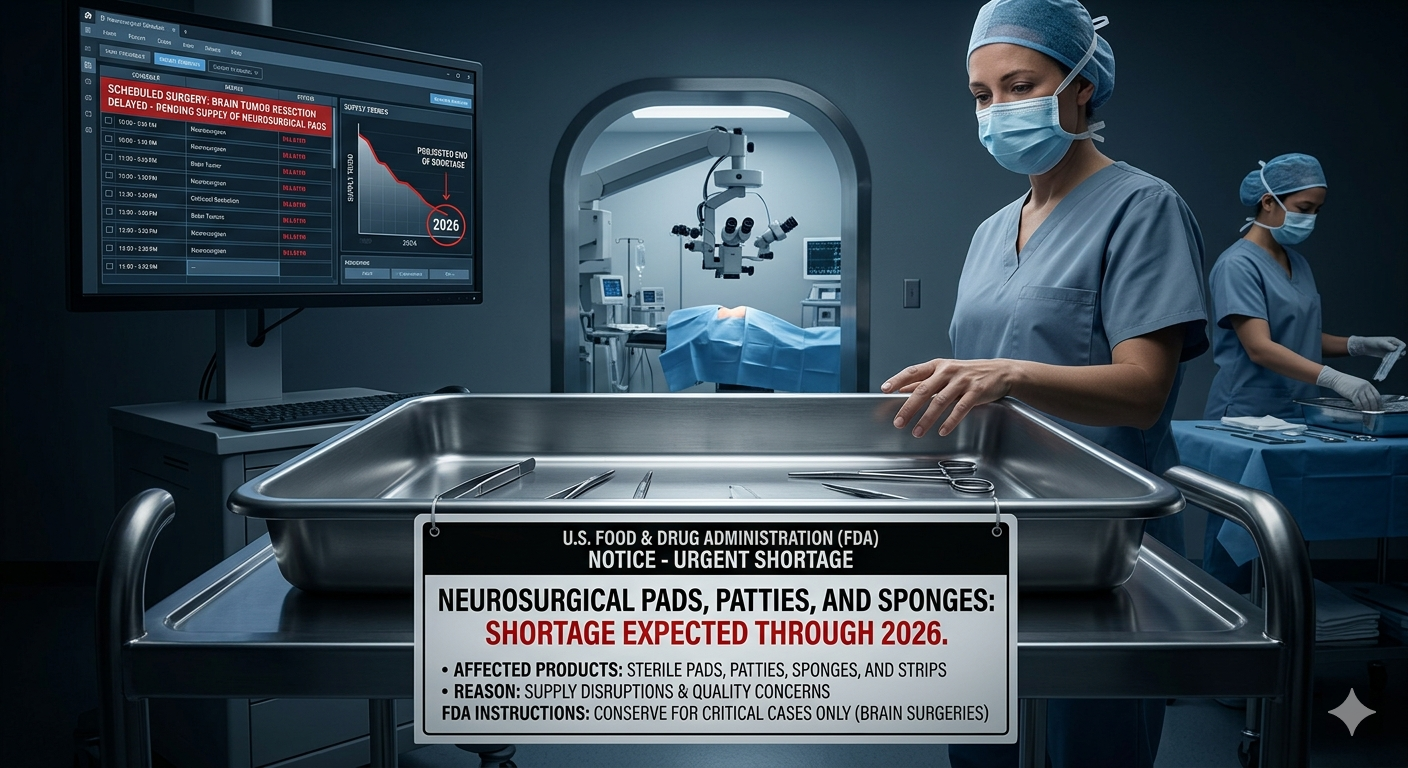
- The U.S. Food and Drug Administration (FDA) has announced an ongoing shortage of critical neurosurgical products, warning that supply disruptions may continue through the end of 2026. The shortage affects sterile neurosurgical pads, patties, sponges, and strips that are widely used during neurosurgery and microsurgery procedures.
- According to the FDA, the agency has added neurosurgical patties, sponges, and strips to its official medical device shortages list. These products play a crucial role in neurosurgical procedures by absorbing fluids and protecting delicate tissue during complex surgeries involving the brain and spine.
- The shortage follows manufacturing and quality concerns involving certain neurosurgical sponge products. In particular, the FDA referenced a recall initiated by Medline Industries involving elevated endotoxin levels in some neurosurgical patties. The agency noted that there is currently no confirmed return date for the affected products.
- The FDA also warned that use of affected products could lead to significant health complications requiring medical or surgical intervention. Reported risks include fever, inflammation, low blood pressure, and nausea. These complications raise additional concerns for healthcare providers performing highly sensitive neurosurgical and microsurgical procedures where precision and patient safety are critical.
- To help manage the shortage, the agency has instructed healthcare providers to conserve available products whenever possible and reserve them for the most critical cases. The FDA specifically highlighted brain surgeries and procedures where alternative products may not be clinically appropriate.
- Industry experts have also emphasized the specialized nature of these devices. Neurosurgical patties and sponges are not easily interchangeable with standard surgical materials, particularly in delicate brain and spine procedures where tissue protection and fluid management are essential. As hospitals and healthcare systems work to manage limited inventories, providers may need to prioritize urgent and high-risk surgeries while evaluating alternative supply options.
- The FDA stated that it continues to work with manufacturers and healthcare providers to monitor supplies and identify strategies to reduce the impact on patients. However, with disruptions expected to persist into 2026, the shortage highlights broader vulnerabilities within specialized medical device supply chains and the importance of manufacturing quality oversight for critical surgical products.



August 17, 2026